Showing posts with label Cocteleria. Show all posts

Wednesday, May 7, 2025

What Is The Oaks Lilly Cocktail May 7, 2025

Welcome back folks. In my last post How Many Mint Juleps Are Served At The Kentucky Derby May 5, 2025, I took a look at the classic cocktail of the Kentucky Derby: The Mint Julep. In researching the Mint Julep, I came across of a second cocktail that is very popular at Churchill Downs known as the Oaks Lilly. 

The Oaks Lilly is the official cocktail of the Kentucy Oaks race that takes place on the day before the Kentucky Derby. According to the article What is an Oaks Lily? Here's how to make the official drink of the Kentucky Oaks by Amanda Hancock, Louisville Courier Journal from MSN.com dated February 5, 2025

"The Oaks Lily draws influence from the Cosmopolitan, according to the cocktail's inventor, Tim Laird. Known as America’s chief entertaining officer, Baird brought pink to the drink as a reference to the long-running Kentucky Oaks tradition of stargazer lilies. The blushing flowers are draped over the winning filly’s shoulders after the Longines Kentucky Oaks"

So how is it made? Here is the official recipe

Finlandia Oaks Lily Cocktail
The official drink of the Kentucky Oaks. Serves 1

1 1/4 ounces Finlandia Vodka
1 ounce sweet and sour mix
1/4 ounce triple sec
3 ounces cranberry juice

Mix the ingredients and pour them into a stemless wine glass with crushed ice. Add a straw and garnish with a blackberry and lemon wedge.
The photo of the Finlandia Oaks Lilly cocktail comes © Courtesy of Churchill Downs Racetrack. 

I can definitely see the Cosmopolitan influence on this cocktail. It sounds like it can be delicious and refreshing on a hot summer's day. Have you had it? Like it? Hate it? Don't really care about it? Let me know in the comments.

I'm working on a couple of new posts. Keep an eye out for it. 

Until Then May You Have Some Happy, Safe and Responsible Drinking,
SiscoVanilla

#SiscoVanilla
#SiscoVanillaHasABrewski
#SiscoVanillaBeerChronicles
#SiscoVanillaAtTheMovies

Monday, May 5, 2025

How Many Mint Juleps Are Served At The Kentucky Derby May 5, 2025

What's up mi gente. I know today is the 5th of May aka Cinco de Mayo aka Cinco de Drinko. Instead of focusing on this made-up obnoxious drinking holiday, I'm going to focus on the official cocktail of the Kentucky Derby: The Mint Julep. The 2025 edition of "The Most Exciting Two Minutes in Sports" is in the books and I was thinking to myself: How Many Mint Jules are sold at Churchill Downs. 

Now I did a small post on my Instagram in September 2024 on Honey Deuce, which is the official cocktail of the U.S. Open Tennis tournament. In the post I focused on the rise of the price of the cocktail from $14 in 2012 to $23 during the last tournament. The USTA announced that a total of 550,000 Honey Deuces were served during the 14 days of the 2024 U.S. Open. Crazy 🤯. How about the Juleps?

The article The 150th Kentucky Derby By The Numbers by Caleb Stultz from the Leo Weekly website states that it was expected that at $22 dollars a cocktail, 125,000 Mint Juleps were going to be served during the day's festivities. That's almost a quarter of the Honey Deuce cocktails sold during the 14 days of the U.S. Open. And that's not counting the 15,000 gallons of Bourbon, 85,000 Oaks Lilies, 425,000 cans of beer and other spirits that were expected to be sold. Double 🤯🤯. So what is a Mint Julep. 

Way back in 2013 I wrote the following post Kentucky Derby Day At The Vault at Pfaff's. In said post, I visited a bar that was showing the Derby on a big screen. I hadn't had a Mint Julep up to that point, so this is what I thought of it:

"The Mint Julep is a very simple cocktail to make. Usually, you would make it in a Copper (or another metal) Julep cup but since this was a somewhat high-volume event, not having the cup for the Juleps is excusable. I had never had a Mint Julep before; I was curious as to how it tasted. The cocktail was nice and light. There was also a subtle sweetness to the cocktail that seemed to mingle well with the bourbon. Since I had to go to work right after, I tried to pace myself since I could see myself quickly sucking the Mint Julep down. On a hot summer day that can be a dangerous thing to do."

Here is the recipe for the cocktail from the official Bourbon of the Kentucky Derby Woodford Reserve:

The traditional Derby Day cocktail, and a southern ritual crafted from bourbon, simple syrup and mint.
INGREDIENTS
2 OZ. Straight Bourbon Whiskey
1/2 OZ. Woodford Reserve® Mint Julep Cocktail Syrup
3 Fresh Mint Leaves
Crushed Ice
INSTRUCTIONS
STEP 1: Express the essential oils in the mint and rub them inside the glass.
STEP 2: To the same glass, add simple syrup, bourbon, and crushed ice.
STEP 3: Stir.
STEP 4: Garnish with more ice, fresh mint, and powdered sugar.

Did you all cash in on the race? What do you think about the classic Mint Julep? Yea? Nay? Meh? Let me know in the comments. I have a side post on the aforementioned Oaks Lilly cocktail coming up next. Keep an eye out for it. 

Until Then May You Have Some Happy, Safe and Responsible Drinking,
SiscoVanilla

#SiscoVanilla
#SiscoVanillaHasABrewski
#SiscoVanillaBeerChronicles
#SiscoVanillaAtTheMovies

Monday, January 13, 2025

The Lean White Russian and Black Cow Vodka January 13, 2025

What's up peeps!!! Hope the new year 2025 is working for you so far. In trying to write without having to drink (too much😉,) I'm going to attempt to check out recipes for drinks and reviews for beers that I come across. One such recipe comes from the November/December 2024 issue of Men's Health magazine. Entitled the Lean White Russian, the cocktail describes the way to make a "healthier" version of the cocktail made famous by "The Dude" played by Jeff Bridges in The Big Lebowski.  

For this cocktail, the ingredients are pretty straightforward: Vodka, Kahlua and Heavy Cream/Half and Half/Milk of some sort. The Russian part comes from the Vodka. The White from the Cream. How does the Kahlua fit in? Well, let's go down the cocktail history rabbit hole. 

The origins of this cocktail lay not in Mother Russia, or their Cold War rivals the United States. No folks, according to cocktail history, the White Russian was created in the country of Belgium to honor a diplomat. According to the post White Russian Recipe from Vinepair.com:

The drink was conceived in 1949 when Gustave Tops, a Belgian barman, created the cocktail, along with its sister cocktail, the black Russian– a White Russian without any cream - at the Hotel Metropole in Brussels in honor of Perle Mesta, then U.S. ambassador to Luxembourg.

Most obviously, Belgium is not Russia, so the drink doesn't take its name from its country of origin. It instead inherited Russia in the name because vodka is the main ingredient.

The magazine profile lists the following recipe for their Lite White Russian:

I've seen the recipe with equal parts vodka and Kahlua/coffee liqueur. Either way, the cocktail is delicious. Especially if you have ulcer and want to continue drinking without aggravating said ulcer. But I digress. Back to the magazine recipe. 

The recipe lists three different vodka's that are recommended. Two are from Smirnoff. I'll bypass those. The third one is the one that caught my attention. Give it a look:


A Vodka made from cow's milk? Well shit this caught my attention. Who came up with this idea. Luckily their website is quite informative. Black Cow Vodka is made in West Dorset, which is located in the Southeastern England. Here is how they describe it:
Black Cow is the world’s first Pure Milk Vodka. Made in West Dorset using the milk from grass-grazed cows. Using milk as our only source ingredient is what makes Black Cow so smooth.
Now that is cool. But what is even cooler is how they don't let anything go to waste when it comes to their milk production. Here is some more info:
At Black Cow we know milk is precious, so we don’t waste a drop. It starts with separating the milk into curds and whey. 

The curds make the cheese – including Black Cow Deluxe Cheddar – but, often, the whey ends up going to waste. We take that whey and, using a secret distilling process, turn it into the ‘world’s smoothest vodka’. So smooth you can drink it till the cows come home.
The idea came from Black Cow co-founders, friends and neighbors Archie and Jacob. I have to admit, this is one ingenious idea that really takes the idea of not letting anything go to waste to a higher level AND making money from it. Bravo!!!

Has anyone had a taste of their vodka? What did you think of it? Let me know in the comments box. Oh, and before I forget. How can I do a post about a White Russian and not show the Dude making it at his home bar with the 37th President of the United States Richard Nixon bowling in the background.

Here's to your health


Until Then May You Have Some Happy, Safe and Responsible Drinking,

SiscoVanilla
#SiscoVanilla
#SiscoVanillaHasABrewski
#SiscoVanillaBeerChronicles
#SiscoVanillaAtTheMovies


Monday, August 1, 2022

What is the Biltmore Habanero Cocktail August 1, 2022

I recently came across the following ad from the New York Times dated May 4, 1934 which advertised a cocktail known as the Biltmore Habanero Cocktail which was sponsored by Mexican Habanero. I wasn't quite sure what Mexican Habanero was. Was it an infused type of agave-based spirit like Tequila or Mezcal? And why at the Biltmore? As you can see, I wasn't quite familiar with both the cocktail and its location. I decided to jump down the New York City History rabbit hole for some more information. First, I wanted to do quick history on the Biltmore Hotel.

The New York Biltmore Hotel was built in 1913 across the street from the recently built Grand Central Terminal. Located at East 43rd Street and Madison Avenue, the Biltmore was a part of a grand complex of hotels and office buildings that would be built over the train rails and be interconnected with the Grand Central Terminal was known as the Terminal City Development. 

According to the article Biltmore Hotel from the New York Preservation Archive Project website:

"The 26-story neo-classical hotel featured a “stone base with arched openings, a gray brick mid-section and terracotta loggia and projecting cornice.” Its H-plan allowed almost all of its rooms outside exposure and it was one of the first buildings in New York City to use air rights, making the hotel significantly taller than surrounding buildings at the time. Among its well-known interior features was a direct connection to Grand Central Terminal, one of the first indoor swimming pools and Turkish baths, rooftop gardens on the sixth floor setback, and a Palm Court with a golden timepiece made famous in popular culture by the saying, “Meet me under the clock.”"

The Biltmore Hotel is to the left of Grand Central

The hotel fell into disrepair and after failed attempts to designate the exterior as a landmark. On August 14,1981, work began to strip the building down and it was reconverted into an office building made of red granite and glass which is now known as 335 Madison Avenue. The famed clock and connecting tunnel to Grand Central still exist. The clock is in the building's lobby and the tunnel connects the building to GCT.

Now on to the Mexican Habanero.

I was doing a quick search online to find out more about what Mexican Habanero is. Nothing really concrete came up. I found many pages for the obvious habanero peppers, Mexican restaurants and other recipes that showcased habanero peppers. I decided to go to one of the main sources of cocktail and spirits history: David Wondrich. I picked up the book The Oxford Companion to Spirits and Cocktails which is edited by him with Noah Rothbaum. I wasn't disappointed. This is how Habanero is described on page 340 of the book:

"Habanero is an aged aguardiente from the Mexican state of Tabasco that is blended with small amounts of sherry or other sweet wines to create what is essentially a cane-based version of Spanish brandy." 

The spirit's popularity was from the 1900s to the 1950s, especially during the Prohibition era in the United States from 1920-1933. It was during this time that tourists to Mexico picked up on this spirit. Once Prohibition was lifted, the producers of Habanero tried to make in-roads into the United States market. It wasn't very successful. According to Wondrich, Habanero is still made and sold locally in Tabasco but not exported.   

Now on to the Biltmore Habanero Cocktail.

After a quick search, I came up with contemporary cocktails which have either muddled habanero peppers in the drink, habanero peppers as a garnish or habanero infused spirits. It wasn't quite what I was looking for. Luckily for me the ad had the recipe for the cocktail. It calls for the following:

Biltmore Habanero Cocktail

1/2 Mexican Habanero
1/4 Italian Vermouth
1/4 French Vermouth
Twist of a Lemon Peel
Almond on a toothpick. 

The dimensions of the cocktail resemble those of a Perfect Martini, though a Perfect Martini would have about 2oz to 3oz of the base spirit of either Gin or Vodka. Well, at least if I was making it. I'm not quite sure what the Biltmore Habanero Cocktail would taste like. Is the Mexican Habanero sherry forward in terms of flavor?  

Please let me know if you have had any. Drop me your thoughts in the box below. 

Until Then May You Have Some Happy, Safe and Responsible Drinking, 

SiscoVanilla 

#SiscoVanilla
#SiscoVanillaServesAndDrinks 
#SiscoVanillaHasABrewski
#SiscoVanillaBeerChronicles
#SiscoVanillaAtTheMovies

Monday, June 20, 2022

Rums of Puerto Rico Ad from the June 18, 1953 New York Times June 20, 2022

I was recently going through the New York Times from June 18, 1953. While scrolling through the pages, I came across an ad for the Rums of Puerto Rico

Unfamiliar with the organization The Rums of Puerto Rico? According to the article How the Rums of Puerto Rico Program Works: An Interview with Director Alexandra Salgado by Will Hoekenga from the American Rum Report website dated October 4, 2019: 

"...since the mid-20th century, Puerto Rico has had its own standards that rum must meet in order to call itself a “rum of Puerto Rico.” 

It started in 1948, when a government-owned corporation called the Puerto Rico Industrial Development Company established the Rums of Puerto Rico program to promote the Puerto Rican rum industry and help it maintain certain production standards." 

At the time of the ad, some of the rums that made up the group were Bacardi (1862 in Cuba/1936 in Puerto Rico), Don Q  (1856), Ron del Barrilito (1880.) 

Without further ado, here is the ad from the Rums of Puerto Rico June 18, 1953.

Have any of you ever had a taste of the then named Cocktail X and Cocktail Y? Whatcha think of them. Yea? Nay? Meh? Let me know,

Until Then May You Have Some Happy, Safe and Responsible Drinking, 

SiscoVanilla 

#SiscoVanilla
#SiscoVanillaServesAndDrinks
#SiscoVanillaHasABrewski
#SiscoVanillaBeerChronicles
#SiscoVanillaAtTheMovies  


Sunday, April 3, 2022

Mandarin Ginger Gin Fizz with Four Pillars Rare Dry Gin April 3, 2022

I recently came across Singapore based food blogger Sarah Huang Benjamin's show Must Try! Asia. I found this show on the Discovery Plus app. Sarah has on her Instagram page a recipe for a delicious sounding cocktail for this past Chinese New Year called the Mandarin Ginger Gin Fizz. You can see the reel at the bottom of the post for the ingredient list and how to make the cocktail. 

What drew my curiosity was the brand of gin that she used for the cocktail. Sarah uses a brand of gin called Four Pillars Rare Dry Gin. I've never heard of the Four Pillars brand so I decided to do a little hunting. 

Started in 2013, the Four Pillars Distillery is a small distillery based in Australia that is known to make some real unique kinds of gin. on their homepage is a listing for their newest gin, the Fresh Yuzu Gin. Looking at their wares they have a Pink Dry Gin, Bloody Shiraz Gin (steeped with Shiraz grapes,) an Olive Leaf Gin, a Spiced Negroni Gin, a Spiced Trade Gin inspired by the spices of India and for the basis of this post the Rare Dry Gin.

The Four Pillars Rare Dry Gin is the first gin created by the Four Pillars distillery. This gin clocks in at 41.8 abv and has a flavor profile composed of  orange, star anise, Tasmanian pepperberry and lemon myrtle among its botanicals.

To read more about the Four Pillars Rare Dry Gin, I recommend you read the review for it by From The Gin Shelf entitled Four Pillars Rare Dry Gin Review dated June 30, 2019. The Gin Is In website also has a review of the Four Pillars Rare Dry Gin.

And here is the video for the Mandarin Ginger Gin Fizz. 


Let me know what you think of it after you whip a couple of them up.

Until Then May You Have Some Happy, Safe and Responsible Drinking,
SiscoVanilla

#SiscoVanilla
#SiscoVanillaServesAndDrinks 
#SiscoVanillaHasABrewski
#SiscoVanillaBeerChronicles
#SiscoVanillaAtTheMovies

Wednesday, September 22, 2021

Bacardi Lawsuit and Decision of 1937 September 22, 2021

I was recently talking to a customer and we were talking about Bacardi Rum. I asked them if they had heard about Bacardi's lawsuit in 1937 that established the precedent that any cocktail that was to be known as a Bacardi Cocktail such as a Bacardi and Coke has to be legally served with Bacardi Rum. The person had no clue what I was talking about. I had posted about it in my older NYCHistory blog entitled A Cocktail By One Name But Includes Something Else dated May 10, 2012. I've decided to reprint the post here with an update to the images of the print ads from the period that mention this lawsuit and decision in favor of Bacardi. I a number of future posts, I will highlight two other legal proceedings that established Goslings as the official rum in a Dark and Stormy and Pusser's in a Painkiller. Until then, here is the post from May 10, 2012:

"A Cocktail By One Name But Includes Something Else

The custom of ordering a specific spirit in one's cocktail is something we do as second nature. But a court case came up in the New York Supreme Court in 1936 (and upheld in the New York Appellate Court in 1937) that shed light on a practice that set the standard for how drinks are made. The case was brought upon by the Compañia Ron Bacardi. In said suit, the Bacardi family sued a number of New York City bars and restaurants of which the Barbizon-Plaza Hotel and Wivel Restaurant (on West 45th Street) were the defendants on the basis that customers ordering a Bacardi cocktail were not being served what they ordered. In other words, the customer ordered lets say a Bacardi and Coca Cola and were given another brand of rum and Coca Cola. The suit was based on the idea that the Bacardi rum was the popular spirit at the time post-Prohibition.

To be honest, the whole thing sounds a bit odd. The case was littered with weird testimonies as to how a chicken sandwich is made whether with chicken or other poultry meat and how beef stew is actually made with beef or beef trimmings. To add to the weirdness factor, the lawyers for the Bacardi family called to the stand the bartender of the New York Athletic Club and the Deal Golf Club, Andre Guex to testify on how he served the presiding Judge, Justice John L. Welsh (who was a member of both clubs) his Bacardi cocktails. The Bartender stated that he served the judge a Bacardi cocktail with Bacardi and nothing else.

After all was said and done, Justice John L. Walsh, ruled:
"Beyond a reasonable doubt subterfuge and a fraud is subjected on the purchaser when BACARDI rum is left out of a drink listed as a "BACARDI" cocktail."
The decision led to an injunction being filed against the defendants and Bacardi drinkers getting their Bacardi in the Bacardi cocktails that they order. What follows below are a series of print ads for Bacardi after the case was decided.

So now when you order a Bacardi and coke, you expect Bacardi. Order a Cuba Libre and you'll probably get well rum if you don't specify a particular brand. Be specific and remember tip your server ;)

FH

For Further Reading
- Click Here to access the article Justice Examines His Club Bartender dated April 28, 1936 from the New York Times website
- Click Here to access the article Cocktails Must Live Up to Name dated April 29, 1936 from the New York Times website"

Here are a couple of the ads that were printed after the decision came out. 

Keep an eye out for my next post. Something new and original is one the way!!!!

Until Then May You Have Some Happy, Safe and Responsible Drinking,
SiscoVanilla

#SiscoVanilla
#SiscoVanillaHasABrewski
#SiscoVanillaBeerChronicles
#SiscoVanillaAtTheMovies


Friday, September 17, 2021

Who Created La Piña Colada September 17, 2021

Tuesday proved to be a very interesting night at Finns Corner Pub (660 Washington Avenue, Brooklyn NY 11238 (347-663-9316)). We had a nice vibe at the bar. People were happy and giving off good energy. 

I had a bartender at the bar that works at two of the top cocktail bars in Puerto Rico come in with a friend. It was nice to shake off some of the cocktail rust in talking shop with her. At the same time we had a couple sitting at the bar from Utah that was in earshot of the conversation and asked if they could join in. Hey, the more merrier I always say. 

They actually had some great questions for us. One they asked was "When is it a good time to ask the bartender for a recommended drink." I answered that it depends on how the room is. A relatively slow and steady night is a good time to ask. A bar that is three deep is never a good time for questions and indecisiveness. Read the room folks. 

The one they posed to the bartender from PR was "What is the most popular cocktail at her bars in Puerto Rico." Without missing a beat she said "La Piña Colada!!!" 

Ah, La Piña Colada. The cocktail who took over the name of the Rupert Holmes song "Escape" and goes hand-in-hand with getting caught in the rain. Don't know it? Come on!!!! 
 
Even the kids know the song since it plays right after the scene where the Magic Mirror introduces us and a martini drinking Lord Farquhard to Princess Fiona in the first Shrek movie.  


But the question made me wonder: Who created the Piña Colada? 
 
So as the story goes, once upon a time in the tropical paradise of Puerto Rico a bartender by the name of Ramon "Monchito" Marrero was slinging drinks at the Beachcomber Bar that was located in the Caribe Hilton luxury hotel. Why he put together rum, coconut cream, pineapple juice and heavy cream is beyond me. But the combination worked and the drink took off like wildfire. 
 
For 35-years Monchito served his signature drink while at the Beachcomber. The cocktail was so popular that in 1978, the Commonwealth of Puerto Rico made the Piña Colada the official cocktail of the island. Here is the official recipe for the Piña Colada from the Caribe Hilton website:

Original Piña Colada Recipe

2 ounces white rum
1 ounce coconut cream
1 ounce heavy cream
6 ounces fresh pineapple juice
½ cup of crushed ice

Add the rum, coconut cream, heavy cream and pineapple juice in a blender. Add the ice and blend until smooth for about 15 seconds. Serve in a 12-ounce glass. Garnish with a fresh pineapple wedge and a maraschino cherry.

I highly recommend that you watch the following video that's a touching celebration of Monchito by many of the bartenders that worked with him throughout the years at the Caribe Hilton.


But as with the history of many cocktails, there is a little controversy concerning its origin and creation. 

The Barrachina Restaurant in El Viejo San Juan lays claim to being the place with the Piña Colada was created. They state that the cocktail was created by Ramon Portas Mingot in 1963. The following video from Cheap Caribbean interviews Barrachina bartender Jorge Ayala, who explains the origins of their Piña Colada.


Barrachina Pina Colada Recipe (Discovering Puerto Rico website)
 
48 oz Pineapple Juice – Cans
15 oz of Coconut Cream (Coco Lopez or Goya)
10 oz of Water (If you use ice and a blender, do not add the water)

Barrachina recommends that you do not mix the blend with ice. Instead freeze the mix stirring occasionally until frozen. Then add rum (to your taste) into a glass and add the frozen mix. Decorate with a cherry and pinaeapple chunks.

 
Have you had any of these famous Piña Coladas? If so, drop me a comment letting me know how you liked them. Finn's is still serving our Pina Colada as the weather remains warm. So swing on by and get yourself one. 

Until Then May You Have Some Happy, Safe and Responsible Drinking,
SiscoVanilla

#SiscoVanilla
#SiscoVanillaHasABrewski
#SiscoVanillaBeerChronicles
#SiscoVanillaAtTheMovies

Friday, May 22, 2020

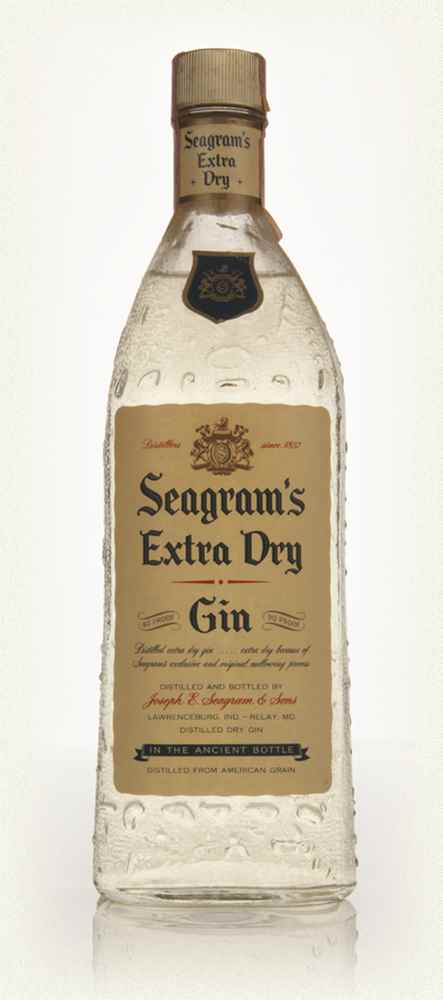
Seagram's Extra Dry Gin Ads May 22, 2020

What's up peeps!!! Hope everyone is doing well today. Just wanted to go back to the Vincent Price and Angostura Bitters May 20, 2020 post. In said post, two of the ads highlighted the Gin 'n Bitters aka The Pink Gin. One of the ads showed a bottle of Seagram's Extra Dry Gin. I had stated that I would post a few ads that Seagram's had for this particular gin. So, here we go back down the internet rabbit hole.

For these ads, I chose ads from the 1960's when the Seagram's Extra Dry Gin hit the market to roughly the 1980's. Seagram's chose to present their gin as the gin that sophisticated, well to-do people drank:


By the 1970's, Seagram's would run ads for specific cocktails that could be made with their "Perfect Martini" gin:

The French Martini (with a couple drops of brandy replacing the vermouth):

Bloody Marys:


And the interesting Italian Martini (with anisette instead of vermouth) and the Red Baron (gin, orange juice, lime and grenadine):


And let's not forget the classic Gin and Tonic, the Gin and Bitter Lemon, the Gin Rickey and the Lemon dipped in Vermouth Gin Cocktail:

 
Never let it be said that Seagram's was only targeting one audience:


Seagram's Extra Dry Gin could be enjoyed no matter the weather or time of year:


These 1980's ads might be the most visually appealing to me:


There are many other Seagram's Extra Dry Gin ads online. Check them out for a blast to the past in terms of liquor advertising. Any particular liquor brands you want me to profile here on my page? Drop me a line in the comment box and let me know what you want to see next. 

Until Then May You Have Some Happy, Safe and Responsible Drinking,
SiscoVanilla

#SiscoVanilla
#SiscoVanillaHasABrewski
#SiscoVanillaBeerChronicles
#SiscoVanillaAtTheMovies     


Wednesday, May 20, 2020

Vincent Price and Angostura Bitters May 20, 2020

Hey peeps!!! How's everyone doing these days. If you gals and guys are anything like me, you are tired of being cooped up at home and even more tired of the news concerning COVID-19. All the misdirection, gossip and politics concerning the pandemic sure has me wanting to put my head though the wall. But that hurts too much. Instead I decide to go down the internet rabbit hole, specifically the New York TimesMachine. And here I came across a doozy (at least to me.) Check out this ad from the January 29, 1972 edition of the New York Times:


Vincent Price, the master of the macabre and Angostura Bitters. Talk about a union in culinary and cocktail heaven (or hell if you want to go the horror route.) With this as a jumping point, down the hole I go to see what else I can find.

Vincent Price was quite the party-smarty (the term foodie yet to become common place.) So much so that he had a couple of cookbooks published including a cookbook with his wife Mary. Here are two examples:


There was an ad campaign that had Price and Angostura Bitters offering a free cookbook via mail. The ads had Price highlighting a recipe along with a cocktail to enjoy with the meal. I was only able to find four of those ads. Two of them advertised the Gin and Bitters aka Pink Gin:


" To be blunt, most parties go wrong in the dreary sameness of the drinks," says party-smarty Vincent Price. "So, next time switch to tots of frosty gin 'n bitters (or, as the English say, Pink Gin). A generous dash of Angostura aromatic bitters and 1 1/2ounces of a fine dry gin over ice - that's all.

The ad shows a bottle of Seagram's Extra Dry Gin in between the cocktail and the bitters.


Seagram's entered the gin market with their Seagram's Gin known as the "Ancient Bottle" in 1939. As the company grew, they branch out with their Extra Dry Gin which hit the market during the early 1960s. I haven't had the Seagram's Extra Dry Gin before. Here is how Seagram's describes it on their website:
If you don’t have a go-to gin, now you do. Smooth and mellow since 1939, Seagram’s Extra Dry Gin is fit for all of your everyday occasions.  The award-winning recipe is versatile enough for your favorite mixers yet complex enough for the gin connoisseur.
Seagram's had a heavy advertising campaign for their Seagram's Extra Dry Gin that I will look at in a later post. The Price/Angostura ads also focused on two classic cocktails, one of which Price highlights a variation of in the second ad:

The first ad has a recipe for a Manhattan:
Over ice, stir 2/3 any good whiskey, 1/3 sweet vermouth, two dashes of Angostura.
And as you can see in the picture, it was strained out into a coupe glass. Nicely done.

The second ad has the riff of an Old Fashioned called a New Fashioned:
A lump of sugar dissolved with 3 dashes Angostura and a splash of club soda, plus two rocks, a twist, a cherry and 1 1/2 ounces light Canadian whiskey. That's what makes it a New Fashioned. 
Thankfully the recipe doesn't call for muddling of the cherry. If you like that sort of cocktail, then rock on. But I like for my Old Fashioned cocktails to look nice and clear with the oils of the twist on the surface and a nice brandied cherry, if requested. Though back when I drank cocktails (over one year and counting,) I did prefer orange bitters in both my Manhattans and Old Fashioneds. But to each his own.

The last cocktail from the Vincent Price/Angostura ads that I came across was for Beef Wellington paired with a Bloody Mary.


Those of you who love an extravagant Bloody Mary with all the garnishes will not like this recipe which simply calls for 3oz icy tomato juice, plus 1 jigger of vodka, 2 dashes of Angostura. Bloodies sure have changed since then.

Anyone have the mail in recipe book? Drop me a line in the comment box if you do. With that I will leave you with the following inspirational quote that is attributed to Vincent Price:


Keep an eye out for the next post. Be safe and healthy out there. See you soon.

Until Then May You Have Some Happy, Safe and Responsible Drinking,
SiscoVanilla

#SiscoVanilla
#SiscoVanillaHasABrewski
#SiscoVanillaBeerChronicles
#SiscoVanillaAtTheMovies  

Friday, April 24, 2020

Cocktail Service in the Thirteenth Floor April 24, 2020

Sometimes movies have an amazing way of bringing the whole "Riding high in April, shot down in May" idea in a couple of scenes, especially when it comes to bars and drinkers. Take the 1999 movie The Thirteenth Floor for example. 
 
 
Here you have Mr. Fuller. He's interacting within a simulated world of 1937 Los Angeles. Think of it as a MMORPG or VR game where you are uploaded to a world set in pre-World War Two Los Angeles. He's a member of a swanky private club and has his own table. The bartender knows it by heart "Gin Martini with one olive and likes them frigid ad an eskimo." And he doesn't even have to order his drink to get one. It comes to his table automatically moments after sitting down. Now that's service aka "Riding high in April."
 
 
Going forward a couple of scenes, Fuller is back in the "real world." He goes to a dive bar and orders his signature drink. He gets it in a shot glass, with no olives "since the bar is out of olives." Luckily for him the bartender was "generous" enough to offer him some pretzels. "Shot down in May 🤣."
 
 
I do have one small issue with the description of the drink by the bartender Ashton (Vincent D'Onofrio.) He says that Mr. Fuller drinks a Gin Martini. Now if you want to be a stickler, in 1937 there wouldn't be any other kinds of Martinis. Why? Well in the United States, Vodka wouldn't become a popular spirit for another decade and a half. I refer to the article Vodka Martini Colleen Graham from the Spruce Eats website updated on April 22, 2020:
Originally called the kangaroo, the vodka martini was among the many cocktails that U.S. bartenders created when vodka first found a larger American market in the 1950s. Like many of the first vodka cocktails, it was simply a recreation of a gin cocktail using a vodka base. Vodka's growing popularity coincided with drinkers' changing tastes. The famous "three-martini lunch" was a little less noticeable with vodka than an aromatic gin. Drinks like the Moscow mule fueled vodka's surge and helped the martini rise to greatness. Today, you almost always have to distinguish whether you want gin or vodka in your martini.
And speaking of the Moscow Mule, I go into the history of that cocktail as it relates to Smirnoff Vodka in my post Ian Fleming's Dr. No (1962) from January 16, 2014. Click on the link to check it out. 
 
The Thirteenth Floor had the misfortune of being released a month after the Matrix which also dealt with the idea of living in a virtual world within a real world. That movie has proved to be very popular while the Thirteenth Floor has somewhat been relegated to cult status or just simply forgotten. If you can watch it, give it a go. It's interesting enough to watch while you're stuck in your "virtual" world waiting for the "real" world to start over again.
 
Until Then May You Have Some Happy, Safe and Responsible Drinking,
SiscoVanilla

#SiscoVanilla
#SiscoVanillaHasABrewski
#SiscoVanillaBeerChronicles
 #SiscoVanillaAtTheMovies

Saturday, December 28, 2019

James Bond Book Number One Casino Royale Part II December 28, 2019

Hey peeps!!!! I'm back at the Royale-les-Eaux hotel for the second part of the James Bond literary cocktail tour. When we last left off in Ian Fleming's Casino Royale, Bond had met his CIA contemporary Felix Leiter and they were sitting down to enjoy a cocktail.


Where Bond had ordered a Haig-and-Haig on the rocks for Felix, he ordered his now signature cocktail. It is in this initial offering of his now immortal spy series that we are introduced to Ian Fleming's signature cocktail: The Vesper. Here is how Bond orders the cocktail on page 44:
Bond insisted on ordering Leiter's Haig-and-Haig 'on the rocks' and then looked carefully at the barman.

'A dry martini,' he said. 'One. In a deep champagne goblet.'

'Oui, Monsieur.'
'Just a moment. Three measures of Gordon's, one of vodka, half a measure of Kina Lillet. Shake it very well until it's ice cold, then add a large thin slice of lemon peel. Got it?'
'Certainly, monsieur.' The barman seemed pleased with the idea.
'Gosh that's certainly a drink,' said Leiter.

Bond laughed. 'When I'm...er...concentrating,' he explained, 'I never have more than one before dinner. But I do like that one to be large and very strong and very cold and very well-made. I hate small portions of anything, particularly when they taste bad. This drink's my own invention. I'm going to patent it when I can think of a good name.'


He watched carefully as the deep glass became frosted with the pale golden drink, slightly aerated by the bruising of the shaker. He reached for it and took a long sip.


'Excellent,' he said to the barman, 'but if you can get a vodka made with grain instead of potatoes, you will find it still better.'
So Bond prefers a grain vodka to a potato vodka? Some of you might say to yourselves: What's the difference. If you have a gluten allergy then you would definitely prefer the potato vodka over the wheat vodka. Before I go into the differences between the potato and grain vodkas, I wanted to define what they are.

Potato vodka is easy, its made with potatoes as the main base ingredient. Grain vodkas can be made from grains such as corn, wheat, rye, barley and others. There are vodkas such as the French vodka Ciroc that is made from grapes, the Milo Vodka from Kansas that is made from Sorghum, the Haku Japanese Vodka made with by white rice by Suntory and the Polish Żubrówka Bison Grass Vodka. I'm sure there are other things that vodka has been made from including fruits. Now on to the difference in the potato and grain vodkas.

For this I go to the VODKA 101 post from the Williams Sonoma Taste blog dated November 29, 2013. The article asks Rich Bubbico, the General Manager at Schiller’s Liquor Bar in New York for his thoughts on the differences between. Potato and grain vodkas:
There are many different varieties out there, but the most common vodka is made with grains. I think wheat is the most common, but rye and barley are frequently used as well. Wheat poses a problem for folks who have gluten allergies, so those who can’t ingest wheat should look for potato or corn vodkas. 
I have tasted a variety of vodkas in my time, and I really don’t think there is a flavor difference between potato vodka and grain vodka. Keep in mind, vodka is a neutral spirit by definition; it lacks flavor or aroma. This is why it makes great cocktails: because it does not distract from the other flavors, it’s like having a blank canvas to start from.
Some other impressions I've come across state that grain vodka, especially those made from corn tend to be the most flavorless of vodka while potato vodkas generally tend to be the most flavorful of vodkas. In the end it comes down to the distillation process. Better distillation produces a better product. This is especially so with Vodka. Now on to the naming of the cocktail.

Bond finally finds a suitable name for his cocktail upon meeting Vesper Lynd on page 52:
'Vesper,' she said. 'Vesper Lynd'

Bond gave her a look of inquiry.


'It's rather a bore always having to explain, but I was born in the evening, on a very stormy evening according to my parents. Apparently they wanted to remember it.' She smiled. 'Some people like it, others don't. I'm just used to it'
'I think it's a fine name,' said Bond. An idea struck him. 'Can I borrow it?' He explained his special Martini he had invented and his search for a perfect name for it. 'The Vesper,' he said. 'It sounds perfect and it's very appropriate to the violet hour when my cocktail will now be drunk all over the world. Can I have it?'
'So long as I can try one first,' she promised. 'It sounds a drink to be proud of.'
'Will have one together when all this is finished,' said Bond.
So did Bond and Vesper finally enjoy her namesake cocktail? Alas they were not fated to have that cocktail together. But don't let me spoil the story for you, go and read the book. As for the cocktail itself...Many thanks to Ian Fleming to introducing this very potent cocktail to the world. Watch the video below to experience how master mixologist Alessandro Palazzi of the famed Dukes Hotel Bar in London makes the Vesper.

In doing so, Palazzi not only makes the Vesper Martini but gives us the behind the scenes history on the inspiration that Ian Fleming tapped into when creating the Vesper. Dukes is known to be the place where Ian Fleming came up with the idea for the Vesper.


You better believe that Dukes Bar is on the top of the list of places to visit on my London bucket list.

For the next post, I go into some of Bond's champagne expertise in Casino Royale. 

Until Then Happy Drinking,
SiscoVanilla

#SiscoVanilla
#SiscoVanillaHasABrewski
#SiscoVanillaBeerChronicles

Monday, December 16, 2019

James Bond Book Number One Casino Royale Part I December 16, 2019

Hey peeps!!!! Today's post came about due to a recent conversation with my friend Melvin. We got to talking about the first cocktail that Ian Fleming's spy 007 himself James Bond had in print. For those of you who might not know, James Bond's adventures were first immortalized in print before hitting the big screen. Fleming started writing his spy novels in the 1950's with his first book Casino Royale debuting in 1953.

Casino Royale was the first of 11 novels and a number of short stories that revolved around James Bond. On a side note, due to licensing and other issues surrounding the Bond franchise, the movies were released in a different order than the books were written in. This is why the Daniel Craig debut Bond movie Casino Royale came out in 2006, almost 40 years after the Peter Niven Casino Royale movie that isn't in the Bond movie continuity. But back to the cocktails.

Unlike the movies where Bond is forever known for his Martini, shaken not stirred shtick, the Bond of the books consumes a variety of spirits and cocktails during his missions. Heck, his signature cocktail which would be christened the Vesper Martini in this book isn't even the first drink that Bond has. That distinction belongs to the Americano. Bond is at the Hermitage Bar awaiting the arrival of Mathis and Vesper Lynd when he orders the Milanese cocktail that was known as the Milano-Torino and now the more commonly referred to as the Americano,

I profiled the Americano Cocktail way back in 2012 with my post entitled surprisingly enough Americano (🤣🤣🤣.) Now the Americano can be had in two different ways with its base spirits being the same. Campari and Vermouth Rosso make up the cocktail with the only difference is the addition of club soda. Here is how the Campari website describes the Americano:
A cocktail you'll love at first sip thanks to its special texture and striking mixture of flavors. There are many legends and stories about how this cocktails got its name, for sure the Americano is one of James Bond's favourite cocktails (he ordered one in 007 Casino Royale). The Americano is part of the official cocktail list of the IBA (international bartending association) and IBA cocktails are prepared all over the world according to this original recipe.
 Well since they mention the recipe for the Americano, here is is:
Americano
- 1 part (1oz, 3cl) Campari
- 1 part (1oz, 3cl) Red Vermouth
- Splash of Soda

Make it
1) Pour the ingredients directly in a old-fashioned glass
2) Fill with ice cubes
3) Add a splash of soda water
4) Garnish with orange slice or lemon peel
Or if you prefer, you can have it without the club soda with the same ratio of Campari and Sweet Vermouth over ice. The choice is yours. Moving on.

After Bond meets CIA Agent Felix Leiter at the casino, they go to the casino bar and Bond orders Felix a Haig-and-Haig on the rocks. Bond orders himself a dry martini which I'll go into a bit later. On to the Haig-and-Haig.

Known for the slogan "Don't Be Vague, Ask For Haig" the John Haig and Company Limited aka Haig-and-Haig has the distinction of being one of the oldest known established Scotch distillers in the world. Apparently there was an incident in 1655 where Robert Haig was taken to task over distilling Scotch over the Sabbath and the records were kept to prove it. Back then this was definitely a No-No on the day of rest. It is believed that the distilling of what is now the Haig line of Scotches goes back to 1627. Haig-and-Haig's line of Scotch whiskies were some of the most popular spirits around the world up to the 1970s and it's no surprise that they would be featured in Ian Fleming's works. Their two most widely found and most popular blended Scotches are virtually the two sides of the same coin.


The Pinch and the Dimple are known for their distinctive three sided bottle with a dimple in the middle of each side. Why do I say virtually the two sides of the same coin? Well Haig-and-Haig would sell the Pinch for the United States market at 86.8 proof (43.4 ALC) while the Dimple was sold in Europe at 80 proof (40 ALC.) Both carry an age statement of 15-years. The age statement would change to 12-yers for more recent versions of the Pinch and Dimple. So when Bond orders Felix a "Haig-and-Haig on the rocks" while in France, we can make an educated guess that he's being poured the 80 proof Dimple and not the 86.8 proof Pinch. So why not just order a Dimple instead of a Haig-and-Haig? Let me try and make another educated guess on that based on some research.


I decide to hit up my trusty The Schweppes Guide to Scotch by Philip Morrice for the answer. According to the book:
Some whiskies are known by different name in different countries. Haig's De Luxe whisky, Dimple, is known as Pinch in the United States, whilst Haig is known there as Haig & Haig after the family offshoot which established itself in the United States many years ago to market Scotch whisky. Similarly, North Americans may be surprised to find that their Dewar's (pronounced Doo-ers, as their advertisements say) is better known in its native land as White Label.

After some issues with rights and ownership in the U.S., the Haig and Haig line became part of the John Haig umbrella in 1925. Even with Prohibition coming and going in the U.S., the Pinch brand was commonly known as Haig-and-Haig. So for Bond ordering a Haig-and-Haig for Felix would lend to the familiarity of having a Pinch on the rocks though in reality he would be having a Dimple on the rocks. Get it? Got it? Good!

And this isn't a one off for Bond and Felix enjoying some Haig-and-Haig. No sir, the Haig-and-Haig Scotch is enjoyed by both gentlemen in later Bond stories that I will get to in later posts. But let's stay at the Hotel Royale-les-Eaux for the next part of the post where I highlight the appearance of Bond's signature drink and the preferred vodka type that Bond likes for said cocktail. Keep your eyes peeled for it!!!

Until Then Happy Drinking,
SiscoVanilla

#SiscoVanilla
#SiscoVanillaHasABrewski
#SiscoVanillaBeerChronicles


Thursday, December 12, 2019

Happy 104th Birthday to Frank Sinatra December 12, 2019

Happy 104th Birthday to the Chairman of the Board: The Legendary Francis Albert Sinatra !!!!


Never one to be called boring, Sinatra (December 12, 1915 - May 14, 1998) used to love his drinks and the good times that accompanied them. His favorite was the spirit that he called "The Nectar of the Gods" good Old Number 7 Jack Daniel's Tennessee Whiskey.


So if you are out and about tonight or just kicking back at home, raise one up to good old Blue Eyes in the way that he liked to drink his Jack Daniel's.

Happy Birthday Frank!!!

Until Then Happy Drinking,
SiscoVanilla

#SiscoVanilla
#SiscoVanillaHasABrewski
#SiscoVanillaBeerChronicles

For Further Reading: