Showing posts with label Distilled Spirits. Show all posts

Tuesday, December 17, 2024

Poland Spring Distilled Gin December 17, 2024

Happy Holidays to one and all. This has been a holiday season that due to the pressures at work and personal issues has not felt very festive. But with a day off before Christmas, I decided to relax by looking through the New York Times Machine to see what ads I can come across. Now consider that Prohibition had been repealed less than two years when the December 17, 1935 edition of the New York Times was published. By this time, bars and restaurants in NYC were back in full swing, many restaurants advertising for the holiday season of 1935. But one particular spirits ad stood out to me because of not only its rarity, but also because of its name brand. Look at the following ad:


Now for those of us New Yorkers, the Poland Spring bottled water brand is one of the most, if not the most recognizable bottle water brand in the city. Poland Spring bottled water even advertises themselves as the official bottled water brand of the 2024 American League Champion New York Yankees. Now imagine me finding this ad for a distilled gin sold in a bottle with a bearded man on the front. Is that Moses? And make no bones about it, this is the one and the same Poland Spring that the bottled water is sourced from. The font used for the advertising has not changed one bit. What better subject to go down the proverbial rabbit hole on a day off. But first a little backstory.

Water has been sourced for sales from the Maine spring since 1845. But the name Poland Spring has been around since the late 1700's. There was a resort that started as a rest stop for carriages to becoming a world class resort. For a more in depth history behind the Poland Spring resort, check the following website The Historic Poland Spring by Brian Harris. On to the gin.

As you can see in the ad, the same Ricker family from the resort sold the Poland Spring Gin and was distilled by H.M. Walker Inc. Not surprisingly, the elaborate bottle with the bearded man is a collector's item. The gin? Not so much. Here is how the flavor profile is described from the GinIsin review:
Poland Spring Gin’s nose has a bit of ethanol and barbershop aroma on the nose. There’s a slight hint of sweetish smelling green juniper cast amidst a hazy, slightly musty aroma.

The palate is slightly acrid, especially at first. Intensely bitter, Poland Spring Gin has an apothecary-type flavor. Tell-tale note of green and slightly pine-forward juniper hits mid-palate, before fading quickly into a slight hint of cinnamon and spice.

The finish is long, with bitter notes of inexpensive vodka, ethanol and rubbing alcohol.

The astringency and dryness you might expect from an inexpensive classic gin are certainly there; however, especially on its own— Poland Spring Gin is a bit rough.

Woof. Not quite the positive review. The gin clocked in at 80 proof/40 ABV. I'm not sure as to when production started, let alone ended. I'll make sure to update the post if I find out more info.

Ever have the pleasure of drinking some of the Poland Spring Gin? Let me know what you think of it in the comments box. I'll be back soon with another post from the December 17, 1935 edition of the New York Times. 

Until Then May You Have Some Happy, Safe and Responsible Drinking,
SiscoVanilla

#SiscoVanilla
#SiscoVanillaHasABrewski
#SiscoVanillaBeerChronicles
#SiscoVanillaAtTheMovies


Monday, April 18, 2022

McKenzie Rye Whiskey from Finger Lakes Distillery April 18, 2022

Hey peeps, what's up. For today's post I'm staying in the New York Finger lakes region. In my last post I did a quick profile for the Hildick Applejack Brandy brand. Now I'm focusing on one of the new school distilleries in the area that produces an interesting Rye Whiskey. 

McKenzie Rye Whiskey from the Finger Lakes Distillery (4676 NYS Route 414 Burdett, New York [607-546-5510]). Finger Lakes Distillery is designated as a New York State Farm Distillery. What does that mean? According to the post What Can You Do as a Craft Beverage Manufacturer? from the New York State Liquor Authority website: 
Farm Distilleries are required to use at least 75% New York grown or produced fruits, vegetables, grain and grain products, honey, maple sap or other agricultural products. Farm distillery licensees may only produce New York State labelled liquor. 
So based on that, here is how McKenzie Rye Whiskey is described on their website:
McKenzie Rye Whiskey is made from local rye grain and is distilled using old-time techniques. We age this whiskey in new charred oak casks and finish in sherry barrels from local wineries. The sherry balances the spiciness of the rye and also gives a nod to the wine region where this whiskey is produced. 750 ml   |  91 proof   
The label also states that it is aged a minimum of 3 years in American Oak casks.

Now I'm very much not drinking any hard liquor these days. But for the sake of this post I poured my self a very teeny teeny amount of McKenzie Rye Whiskey to wet my palate. Its been a while since I've had any brand of rye whiskey but I have to say that I like what McKenzie brings to the table. 

I found it to be sweet with a subtle spice on the back end. It isn't as spicy as other ryes that I've had and enjoyed. But it was just enough spice. It was also very aromatic to the nose. It also left me with a nice tingle on the lips that I have to admit that I've missed. 

I highly recommend that you try some. We have it available at Finns Corner (660 Washington Ave, Brooklyn, NY 11238 [347-663-9316]) for your drinking pleasure. Roll on in. 

For my next post I'm focusing on Heineken's newest offering, a low ABV brew known as Heineken Silver. Keep your 👀 peeled for it. 

Until Then May You Have Some Happy, Safe and Responsible Drinking, 
SiscoVanilla 

#SiscoVanilla
#SiscoVanillaServesAndDrinks 
#SiscoVanillaHasABrewski
#SiscoVanillaBeerChronicles
#SiscoVanillaAtTheMovies  

Monday, April 11, 2022

Hildick Applejack From the May 16, 1934 New York Times April 11, 2022

In today's liquor world Laird's Applejack Brandy is the king of applejack brandy here in the United States. Tracing their history to 1717 with the creation of the original distillery, Laird's has the distinction of being the oldest distillery in the United States. But at one time there were many distilleries producing applejack brandy. One such distillery was the Bashford Cider and Vinegar Works based in the Finger Lakes area of New York State. 

I found the following ad for the Hildick Applejack from the New York Times dated May 16, 1934. The Bashford Cider and Vinegar Works was located in Lyons, N.Y. and their distiller was a man called Walter Hildick. They produced a 100 proof applejack brandy and the ad listed a number of cocktails that one could enjoy with their applejack brandy. So what happened to the Hildick brand of applejack brandy? According to the article LOOKING BACK: New museum room to feature Wayne businesses -- then and now from the Finger Lakes Times website By Larry Ann Evans dated August 27, 2017 this is what happened to the distillery:

James D. Bashford built several factories in Lyons, but the one that most remember is the cider and vinegar factory on Water Street. The brandy business was later sold to Jack Laird. The Lairds of Red Bank, N.J. are considered the oldest producer of applejack in the country. When the last barrels of applejack were made under Laird in Lyons, the factory was sold to the Speas Company of Kansas City, a national wholesale distributor. Under them a million gallons of cider was produced annually and apple brandy was manufactured each fall. In September 1968 the mill closed and on May 11,1976 it was destroyed by fire.

I'm not sure when the Hildick line of applejack was discontinued. I wish I knew to give the Hildick portion of this post a proper ending. 

Curious as to why this particular spirit is known as applejack? According to the article Defining Moments in Hudson Valley Applejack from the Hudson Wine Magazine website dated January, 2020:

During the early Colonial Era in America, apple seeds from Europe were planted extensively, and almost every farm in the New World soon had its own apple orchard. After a harvest, surplus apples were pressed into cider, which was plentiful and cheap. Early settlers quickly came to favor cider and cider brandy, or “applejack,” which was traditionally made by allowing “hard,” or fermented, apple cider to freeze outside during the winter months. The layers of ice were removed and the liquid allowed to re-freeze—sometimes three or four more times—to concentrate the alcohol.

The word “applejack” itself is said to have been derived from the term “jacking,” an early term for freeze distillation. The resulting unfrozen liquid, however, was a crude and powerful drink, whose effect, it’s been noted, was like “a crack on the head with a hammer.”

What's the difference between applejack, apple brandy and blended applejack? The article Hudson Valley Applejack from the Hudson Valley + Capital Region Ultimate Cider + Apple Spirits Guide states:

The terms applejack and apple brandy are still synonymous (i.e., distilled from 100% apples), but new federal regulations allow for a “blended applejack” with up to 80 percent neutral grain spirits – a relic from the post-war years when consumers lost their taste for fruit brandy, and companies looked for cheaper ways to produce it.

Currently New York State is having a renaissance with the production of applejack and apple brandy. We'll see how the market for this American of spirits continues to grow in the next few years. With that in mind, let me take this post back to Hildick applejack brandy.

Hildick had a number of cool looking posters for their applejack brandy with cocktail recommendations on each one. Here are four that I came across online:


Have you had a taste of any of the newer applejack brandies on the market? Feel free to let me know what you think. 

Until Then May You Have Some Happy, Safe and Responsible Drinking,
SiscoVanilla

#SiscoVanilla
#SiscoVanillaServesAndDrinks 
#SiscoVanillaHasABrewski
#SiscoVanillaBeerChronicles
#SiscoVanillaAtTheMovies  


Thursday, April 7, 2022

Dubonnet Meets Vodka from the June 3, 1975 New York Times April 7, 2022

I went digging through the time machine known as the New York Times for liquor ads. Since it seems that I've been in the 1970s concerning cocktails as of late, I decided to check the New York Times for June 3, 1975. Tuesdays seem to be a good day to find a plethora of liquor ads in the old Gray Lady. I found six liquor ads in that day's newspaper, unfortunately for my research purposes they were all the same ad: Dubonnet Meets Vodka.

I last profiled Dubonnet in my March 11, 2014 post entitled OSS 117: Le Caire, nid d'espions (2006) In that movie, the main character suggests a Dubonnet to his companion for the evening. If you don't know what Dubonnet is, here is a brief history lesson. 

Dubonnet is a French aperitif whose origins lay with the French Foreign Legion. French chemist Joseph Dubonnet came up with his namesake as a way to make quinine easier to drink for the French soldiers fighting in North Africa during the 1840's. Dubonnet is known as an aromatized wine that is flavored with herbs, roots, flowers, barks, quinine and other botanicals. Dubonnet has a very low alcohol content of 19%. 

Now I have yet to taste Dubonnet. I refer you to the article What Is Dubonnet and How Does It Taste? by Oliver Hoss from the Wine Lover Magazine dated September 23, 2020:
The base for Dubonnet is a still wine made from different red grapes...The key to making Dubonnet is to stop the fermentation process early by adding neutral grape brandy. Vintners then mix the must with bark from the Cinchona tree, which is the basis for quinine. They also add cane sugar and several herbs to give the wine its typical spicy taste.
So what does it taste like? I refer back to the abovementioned Oliver Hoss article:
Think of Dubonnet as a combination of fortified wine like Port or Sherry and a herbal liqueur. With an alcohol content of 15% and a thick, almost syrup-like texture, it’s a full-bodied and robust drink. It offers sweet as well as bitter flavors. The latter comes primarily from quinine, which still is a crucial ingredient.

Other flavors you can sense include herbs and spices, such as thyme, rosemary, fennel, anise, orange zest, and nutmeg. You might also perceive notes of cacao, raisins, and lavender, as well as earthy or wooden aromas.
In the 1930s, famed French artist Cassandre created the Dubonnet Man ads with the slogan "Dubo, Dubon, Dubonnet" which you can see below:


The aperitif was favorite of the late Queen Elizabeth aka the Queen Mother and is favored by her daughter Queen Elizabeth II. Both Queens would get their Dubonnet in a cocktail with gin at a ratio of 70% Dubonnet to 30% Gin with ice and a slice of lemon. 

To read more about the drinking habits of the British Royal Family, check out the article How to drink like the Royal family from the UK Telegraph. The recipe in the ad calls for a cocktail of 2 parts Dubonnet and 1 part Vodka with a twist of lemon. 

What I find curious is why not try to capitalize on how popular Dubonnet and Gin was with the UK Royals at the time and show that combination in ads here in the United States rather than Dubonnet and Vodka. Was it due to Vodka becoming a more popular spirit here in the U.S. than Gin? Possibly. 

If you look at some of the more popular cocktails of the era such as the Harvey Wallbanger, the White Russian, the Greyhound/Salty Dog and the Moscow Mule to name a few are Vodka based cocktails. So maybe that's the reason for Vodka in the ad instead of Gin. 

Since 1976 Dubonnet owner Pernod Ricard has produced two variations to the classic Dubonnet Red: Dubonnet Blanc and Dubonnet Gold. 

So what do you think about Dubonnet. Like it? Hate it? Meh? Let me know. I'm curious to hear what you think of it. 

On a parting note, I'll leave you with a classic Dubonnet commercial from the early 1970's with a pre Charlie's Angels Farrah Fawcett and a pre Magnum P.I. Tom Selleck. 


Until Then May You Have Some Happy, Safe and Responsible Drinking,
SiscoVanilla

#SiscoVanilla
#SiscoVanillaServesAndDrinks
#SiscoVanillaHasABrewski
#SiscoVanillaBeerChronicles
#SiscoVanillaAtTheMovies  


For Further Reading:

Tuesday, April 5, 2022

What is Light Whisky From the December 9, 1963 New York Times April 5, 2022

Hey peeps, I recently reupped my subscription with the digital version of the New York Times thanks to a timely gift subscription (Thanks Deborah!!!)  As I am prone to do, I like to go back in time via the New York Times Times Machine and look for old beer and booze ads. For today's non beer post I went back to December 9, 1963 and came across two related ads that piqued my interest. Here are the two ads:


For more information on the William Lawson's Light Scotch Whisky and King's Ransom brands listings, you can check them out on the ScotchWhisky website.

What caught my eye was the term "Light Scotch Whisky" and I thought to myself "What exactly is Light Scotch Whisky." Down the rabbit hole I go.

Light whisky is a category of whisky born in the United States due to a couple of reasons. One was the rise in popularity of neutral grain spirits such as Vodka and Gin. Second was the fall in popularity of American whiskey and third was the inability of the American whiskey products being able to match cost and prestige with imported whiskys. Research showed that drinking patterns fell towards the lighter distilled spirits like Vodka and Gin and the lighter flavors of the imported scotch whiskys. So what was to be done about it? Government regulation.

According to the CFR: Title 27. Alcohol, Tobacco Products and Firearms § 5.22 - The standards of identity:
“Light whisky” is whisky produced in the United States at more than 160° proof, on or after January 26, 1968, and stored in used or uncharred new oak containers; and also includes mixtures of such whiskies. If “light whisky” is mixed with less than 20 percent of straight whisky on a proof gallon basis, the mixture shall be designated “blended light whisky” (light whisky - a blend).
So what did this mean for the end result which hit the market in 1972. According to the article The Accidental Return of Light Whiskey by Aaron Goldfarb from Punch.com dated May 7, 2019:
By definition, light whiskey had to be distilled to at least 160 proof, though it was typically distilled as high as 190 proof, stripping it of its flavor until it closely resembled grain neutral spirit (GNS). (Bourbon, by contrast, usually enters the barrel in the 100- to 125-proof range and legally can never be distilled higher than 160.) Light whiskey would then be briefly aged in used barrels, typically bourbon barrels, which, having gone through the ringer a few times, were largely lacking in char flavor. These factors resulted in a mildly flavored, almost vodka-like whiskey. It failed to catch on as a standalone spirit and, for the last three decades, has been used as the cheaper, more neutral component of lighter American and Canadian blends.
To be honest, I had never heard about Light Whiskey but it seems to be that they were basically trying to make a whisky flavored vodka. This is rather ironic since the early advertisements for American made Smirnoff Vodka tried to pass it off as "white whiskey." It would be the inclusion of Smirnoff Vodka in the 1950s cocktail invention The Moscow Mule that would catapult Vodka's popularity in the decades that followed and helped bring down the popularity of American whiskey. I shed more light on this my post Ian Fleming's Dr. No (1962) dated January 16, 2014.

Not surprisingly the light whiskey category never really caught on and seemed to fade off into obscurity...until recently. High West Distillery of Utah has the High West 14-year Light Whiskey. Weaver’s Spirits of Colorado has their American Light Whiskey – Mount Massive Expression.
Whether or not the Light Whiskey category can catch on today or fade once again into obscurity remains to be seen. To read a more in depth article on light whiskey, I recommend you read Chuck Cowdery's article The Strange Story of How Light Whiskey Saved Bourbon dated August 5, 2015.

Ok, time to climb out of the rabbit hole. Any of you fine gals and guys try any version of the light whiskey on the market? Yay? Nay? Meh? What did you think? Drop me a line and let me know.

Until Then May You Have Some Happy, Safe and Responsible Drinking,
SiscoVanilla

#SiscoVanilla
#SiscoVanillaServesAndDrinks
#SiscoVanillaHasABrewski
#SiscoVanillaBeerChronicles
#SiscoVanillaAtTheMovies 

Monday, July 27, 2020

What is Clove Liqueur July 27, 2020

Hey peeps. What's up. I hope everyone is safe and healthy. I was recently watching an episode of Chopped on Food Network and for those of you who aren't familiar with that show, chefs are given a basket with secret ingredients and they are to make a meal with the ingredients. In this episode, one of the ingredients was Clove Liqueur. 


What is Clove Liqueur? Great question. Aside from the obvious answer of a Liqueur made with Cloves, I have no idea. For me the thought of cloves invokes Christmas, winter and the allure of Hot Toddys. But Googling "Clove Liqueur" doesn't give an exact answer.

One recipe entitled DIY Orange and Clove Liqueur from the Hallmark Channel website. The liqueur is made with brandy and sugar with a suspended orange poked with cloves. This method is similar to how Limoncello is made by having the oils from citrus naturally drip over time into the brandy and sugar mixture. Very interesting method of infusion. 

I also came across liqueur type generally known as Tentura which is a based on the kind of liqueur that is traditionally made in the Greek city of Patras. Cinnamon, cloves, citrus and nutmeg are some of the common spices used for infusion. As with the above recipe, Brandy is the common spirit used for infusing through if you were to make your own, any spirit of your choosing would do. I've infused rum with similar spices to make a spice rum and I've also infused an unfiltered apple cider with cloves and other spices. 

I'll keep looking out for Clove Liqueur in my travels. Anyone ever drink some? Let me know what you thought of it in the comment box.

Until Then May You Have Some Happy, Safe and Responsible Drinking,
SiscoVanilla

#SiscoVanilla
#SiscoVanillaHasABrewski
#SiscoVanillaBeerChronicles
#SiscoVanillaAtTheMovies


Tuesday, May 26, 2020

Danger Diabolik (1968) Part II May 26, 2020

Hey peeps, welcome back to the next edition of SiscoVanilla at the Movies. I hope everyone is healthy and safe. For today's post, I'm going back to the Italian heist film Danger Diabolik that was directed by Mario Bava and starred John Phillip Law, Marisa Mell, Michel Piccoli and Adolfo Celi.


In this scene, the movie has progressed quite a bit in the plot to try to catch Diabolik (John Phillip Law) by gangster Valmont (Adolfo Celi.) The party is always on with Valmont with booze free flowing. Whether it be on his plane, at his apartment or at his pool, Valmont always has a cool cocktail within reach.


In addition, Valmont is accompanied by his gun moll Rose (Annie Gorassini) who joins him drink in hand. 


As with the last post Danger Diabolik (1968) Part I May 1, 2020, I find that these movies are a great time capsule of sorts, especially when it comes to popular booze. Take a look at the picture below:


Again, as with the last post, Valmont has a variety of spirits available at his disposal. One particular bottle stands out to me: the Noilly Prat Original Dry.


Noilly Prat Original Dry is a French Vermouth that was created in 1813 by Joseph Noilly in Lyon, France. The aperitif clocks in at 18% abv (36 proof) and is described as such on the Noilly Prat website:
20 different herbs and spices are sourced all around the world to make Noilly Prat Original Dry. Among them Chamomile, Coriander from Morocco, Bitter Oranges from Tunisia, Cardamom from India, or Elderflower. Noilly Prat Original Dry is ideal served as L’Apéritif and paired with seafood, such as oysters.
The website recommends that you enjoy their Noilly Prat Original Dry an a L'Apéritif Original Dry on Ice, Original Dry Le Sud (with chilled Perrier) and in a 50:50 Martini Cocktail. Noilly Prat also makes an Extra Dry Bianco Vermouth, an Ambré Vermouth and a Rouge Vermouth.


Since I mentioned the pool earlier, I wanted to show you gals and guys how Valmont spends his time while in the pool. 


This dude has a floating bar with his personal bartender at his beck and call !!! Let's take a closer look to see what spirits he has on the bar.


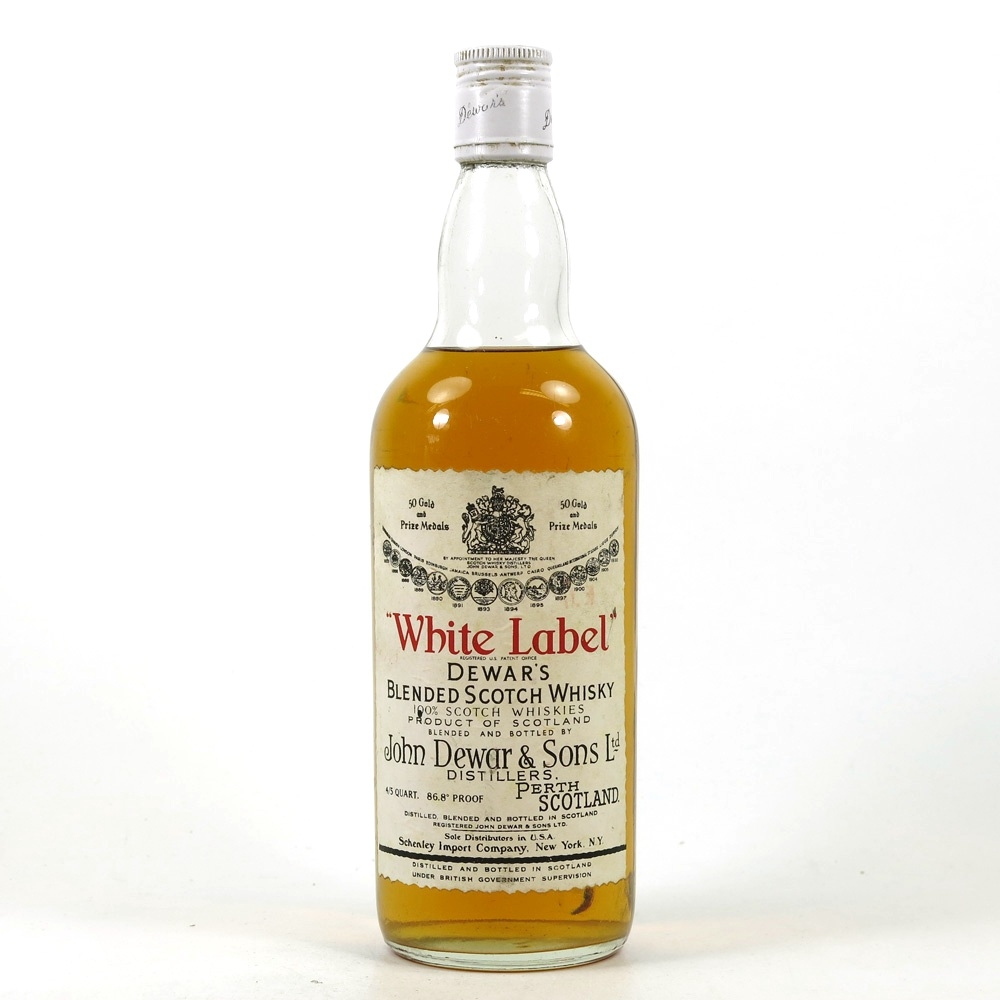
Aside from fruits, snacks and an ice bucket, I see that he has a bottle of Dewars "White Label" Scotch Whisky.


This brand is the rare spirit that worldwide is referred to by the color of its label instead of its company name. If someone orders a scotch and soda, a bartender might ask: "You have a preference? or What Scotch would you like?" But if you order said drink as a "White Label" and soda, then we know what it is that you want. The story starts with the birth of John Dewar in 1806 in Perthshire, Scotland.

As a young man, Dewar went to work for a relative in Perth, Scotland who was a wine and spirit merchant. Dewar showed his value to the company by moving up the ranks, becoming a partner in the company in 1837. By 1846, he left the company to start his own business. According to page 207 of the Schweppes Guide to Scotch by Philip Morrice:
He began to blend and bottle his own whisky in a modest way and sought sales beyond Perth. Indeed, one of Dewar's many claims to fame is that they were the first to sell whisky in branded bottles.

Dewar's son, John Alexander Dewar would become a partner in the firm in 1879 and younger son, Thomas, would become partner in 1885. John Alexander was the analytical of the two brothers while Tommy was a showman who would have probably been quite comfortable with product branding and sales in today's social media forward market.

One story has Tommy employing bagpipers at a trades how to drown out the other vendors and draw attention to his products. Tommy also went on a worldwide tour which he kept a journal about  known as 'A Ramble Round the Globe' to bring his whisky to new markets. You can read the book via the Internet Archive courtesy of Google Books: 'A Ramble Round the Globe.' The article Tommy Dewar: A Ramble Round The Globe from the Kingdom Golf website highlights the trip. This leads into another story.  


This one has Tommy in New York City in 1892. He's at a bar and orders a tall glass of his company's whisky with soda and ice. This led to the creation of the Original Highball better known today as the scotch an soda. By 1902, Dewar's would trademark the term "High Ball." Not to be overshadowed by his younger brother, John Alexander would also make waves in his own ways.

In 1893, John Alexander was able to secure the Royal Warrant of Queen Victoria for the John Dewar and Sons whisky brand. In doing so, this would be the first time that a blended Scotch whisky would earn such a designation. One that it still holds today. Both brothers were like two sides of the same coin: John Alexander had the seniority with Tommy as the face of the company. Both brothers helped to make the John Dewar and Sons LTD a worldwide recognized brand.

Another key addition to the John Dewar and Sons team was with the arrival of A.J. Cameron in 1890. Cameron would start as a desk clerk, working his way up to the position of Master Blender. What influence did Cameron have with the Dewar's White Label offering? According to the Dewar's "White Label" website: 
In 1899, a year after production commenced at Dewar’s new distillery, Aberfeldy, A.J. Cameron created the now-iconic Dewar’s White Label. Over the next 120 years our flagship blend established itself as one of the leading blended Scotch whiskies worldwide.    
Since 2006, all of Dewar's blended scotches are blended by Stephanie Macleod the first female Master Blender in Dewar's history and the seventh Master Blender. Macleod would join the company in 1998 and like Master Blender Cameron, Macleod would work her way up the ranks. She started in quality control eventually rising to the position of Master Blender.

John Dewar and Sons has scotch whisky blends from their flagship "White Label" to their Double Double 32-Year-Old. I personally liked the Dewars 12 (when I drank spirits.) My dad on the other hand used to drink the White Label along with Cutty Sark back in the day. Which one is your favorite? Drop me a line in the comment box and let me know.

Until Then May You Have Some Happy, Safe and Responsible Drinking,
SiscoVanilla

#SiscoVanilla
#SiscoVanillaHasABrewski
#SiscoVanillaBeerChronicles
#SiscoVanillaAtTheMovies

Tuesday, May 19, 2020

Kill Bill Vol. 2 (2004) Part II May 19, 2020

What's up peeps. New post here to tie up some loose ends. Back on January 7, 2015 I put up the post Kill Bill Vol. 2 (2004) Part I hoping to do the second part soon thereafter. But as we know, things don't always go to plan. But here I am with Part II for your reading enjoyment.

Beatrix has moved past taking out Budd (Michael Madsen) and Ellie Driver (Daryl Hannah) and now is on the hunt for the titular Bill (David Carradine.) She locates the one person who can direct her to Bill: Esteban Vihaio (Michael Parks.) We see some unusual product placement in the cantina in the form of Sol advertising on the chairs.  I say unusual since Tarantino's movies (also Robert Rodriguez's movies) tend to use fake products such as the Red Apple Cigarettes or Chango beer in their scenes.


Sol is a Mexican lager that has been produced since 1899. Clocking in at 4.5% ABV, I would put Cerveza Sol in the same category as Corona and Cerveza Pacifico among others. Vihaio is sitting at a table reading a book, smoking a cigarette with a snifter of something light brown for his drinking pleasure.


What that is I can't tell but it might be answered a bit later on in the scene. As they are discussing Bill and his whereabouts, Vihaio asks for Beatrix to have a drink with him and he orders "dos añejo." 


The scene moves on to Beatrix back on the road with the directions given to her by Vihaio. We don't see them having that drink of  los "dos añejo."  I'll touch on what an añejo is in the next set of images. 

Beatirx finds the suite where Bill is and sneaks her way in. As she lies in wait, I notice a number of bottles of booze along on the wall. 


One is a bottle of Bacardi. Another is a bottle of Tuaca, which I reviewed in the post What is Tuaca January 31, 2019. The third I'll touch on soon. The story progresses to the point where Beatrix finds out her daughter B.B. is alive and well. After a touching moment where she spends some alone time with B.B. and puts her to bed, the scene moves to Beatrix and Bill. Here we see Bill standing at the bar with the third bottle that I mention above.


This particular bottle is a spirit that back in the early 2000's I used to enjoy with my friend Mike: Tres Generaciones Tequila Añejo. Now allow me to touch on what añejo means in terms of tequila. 

As I mention with my post Casa Herradura Original Tequila Reposado May 14, 2020
the designation of the types of tequila are regulated by el Consejo Regulador de Tequila (TRC.) All tequila must be made of 100% Agave Tequilana Weber variety Azul better known as blue weber agave. The agave must be grown in, cultivated and processed within the Mexican state of Jalisco in order to be called tequila.

A tequila blanco is the tequila that comes straight out the copper still after the number of distillations set by the distiller. Tequila reposado is a tequila that is rested for a minimum of two months and a maximum of a year in oak barrels. Tequila añejo must be aged in barrels of no more than 600 liters for over a year. Very often bourbon and whiskey oak barrels are used for the aging, imparting different flavor notes and a darker color than found in a reposado tequila.

The roots for Tres Generaciones tequila go back to 1873 with Don Cenobio Sauza (October 30, 1842 – February 15, 1909). In that year, Don Cenobio who is often known as "The Father of Tequila" purchased “La Antigua Cruz” distillery and renames it “La Perseverancia.” Don Cenobio would pass the knowledge of making tequila down to his son Don Eladio Sauza (June 16, 1883 – July 22, 1946) who would further expand operations under the Casa Sauza brand. 

Don Eladio would in turn hand the reins of the company to his son Don Francisco Javier Suarez . Don Francisco Javier would work to make tequila a worldwide spirit and also helped to spearhead the efforts to make tequila a Mexican only product with the Denominación de Origen (appellation of origin.) This helped to set up the state of Jalisco, specifically, the region of Tequila as the only area in the world where tequila can be produced. If other places in the world, including other areas within Mexico that weren't in Jalisco made an agave based spirit, it would need to be called something other than tequila.  


Photo Courtesy of TresGeneraciones.com
The Tres Generaciones line of tequila, was named as such in honor of Don Cenobio, Don Eladio and Don Francisco Javier. According to the website:
One of the proudest accomplishments of the Sauza family, Tres Generaciones® is the result of three generations of hard work, wisdom, skill, passion and courage—a super premium tequila, triple distilled for superior smoothness, to be enjoyed neat, on the rocks, or in a selection of sophisticated cocktails.
 In terms of the Tres Generaciones Añejo, the website states that:
Our Añejo Tequila has a rich, 100% blue agave flavor enhanced by 12 months in toasted American oak barrels where it gains its delicate amber hue, an array of subtle flavors, and its unique smooth, smoky finish.

Bill seems to like this particular tequila since he partakes of it while giving his Superman soliloquy.


And he does so numerous times right before the climax of the movie.


You know what happens next if you've watched the film. If you haven't then go watch it. To finish the post I leave you with this beauty of a banter between Beatrix and Vihaio when he mentions the truck Beatrix was driving in the first film:


Have a great one folks and be safe. See you soon with a new post.


Until Then May You Have Some Happy, Safe and Responsible Drinking,
SiscoVanilla

#SiscoVanilla
#SiscoVanillaHasABrewski
#SiscoVanillaBeerChronicles
#SiscoVanillaAtTheMovies 


Friday, May 15, 2020

Los Danzantes Mezcal May 15, 2020

Hey peeps. What's up!!! I'm back watching the show This is México that is shown on the Tastemade network. The program is hosted by Mexican born chef Gerardo Lopez and focuses on traditional Mexican food, drink and culture. In the episode Making Mezcal in Oaxaca Lopez is in the town of Santiago Matatn, Oaxaca, which is considered the "World Capital of Mezcal."  They are profiling the Los Danzantes Destileria.

Image Courtesy of LosDanzantes.com
 As with tequila, Mexico has a designated area specified by la denominación de origen which was established in 1996 by the Mexican government. This means that only spirits made in this Mexican state can be called mezcal. Mezcal and tequila are very similar in that they are produced from the agave plant. Mezcal come from the maguey plant while tequila comes from the blue weber agave plant. Both are grown, and cultivated in similar ways. Where the process differs comes from the processing.


Where the agave piñas for tequila are cooked in ovens, mezcal producers such as the profiled Los Danzantes Distillery hark back to the methods used by the natives to cook the maguey piñas. The website for Los Danzantes describes the process:
For six hours beginning at dawn, burning wood warms the river stones heating the inside of the oven. Then they are covered with a damp coating of maguey fibers, on top of which are placed the piñas (the heart of the maguey) in the shape of a pyramid. Finally, everything is covered with a layer of empty sacks and sealed in the underground oven for three days.
The smokiness and earthiness profile of the mezcal comes from this method of cooking. The word for Mezcal is actually a combination of two Nahuatl words:
Mexcalli = Agave
Ixcalli = Underground pit oven cooked
For those of you who don't know, the Nahuatl are a member of a group of peoples native to southern Mexico and Central America, including the Aztecs. Oaxaca is the district in Mexico that had the highest percentage of natives. As was stated in the program, the natives fled into the mountains when the Spaniards arrived. In doing so, native culture and customs stayed intact and has survived the centuries to today.

Another distinctive feature of the method for producing Mezcal is extraction of the mezal. Unlike some distillers that use modern methods, Los Danzantes uses native methods for extraction. Pre-Columbian natives initially used a hammers to pound the liquid from the cooked piñas. After the arrival of the Spaniards with their horses, extraction was upgraded in the method used by Los Danzantes:
Once the maguey is removed from the warm interior of the earth and cooled, it is crushed in a stone mill, where Samson the horse pulls a quarry rock wheel. The action of the quarry rock wheel releases the sugars and juices that later become alcohol.
The juices and the pulp fibers of the plant go into fermentation tanks for six days while natural yeast converts it into a fermented liquid which is called tepache. This goes into the distillation still with the pulp for a double distillation. The first distillation separates the solids and impurities while the second distillation refines the process. What happens next comes from the Los Danzantes website:
During the second distillation, we refine the product, separating the ends, body, and tails, and extracting the aroma and flavors produced during fermentation. Then, a master mezcalero uses a technique called veneciar – with the help of a hollow cane and a calabash bowl – to measure the alcohol content. He does this by observing the shape, size and duration of ‘pearling’, a traditional technique used to measure alcohol content.
In this case, the master mezcalero is master mezcalera Karina Abad.

Los Dazantes Destileria has been making mezcal since purchasing a disused mezcal distillery in Santiago Matatn in 1997. Their five year plan became a twenty year plan. Why? Well, as someone who has worked in the bar business since 1995, not only was mezcal not a popular spirit but it wasn't even known to many in the 1990s.

I would say that mezcal started to become a mainstream popular spirit within the last five to ten years. Prior to 2015 you had to go to a tequila bar such as the now closed Mayahuel to find a selection of mezcals. Now you can walk into most bars and find at least one mezcal. Finn's Corner Pub where I bartend has two (Mezcal Unión Uno and Mezcal Montelobos.) Mezcal is much easier to come by these days.
Photo Courtesy of LosDanzantes.com

Los Danzantes has three core mezcals that are made with 100% Maguey Espadín (Agave angustifolia Haw):
  • Joven/Blanco
  • Reposado (aged 9 months, 70% of the time in American white oak barrels and 30% of the time in French white oak barrels)
  • Anejo (aged for 16 months: 70% of the time in American white oak barrels and 30% of the time in French white oak barrels)
The barrels are only used by Los Danzantes and have never held any other spirit than their mezcal. They also have a couple of special mezcals that they make on a seasonal basis including a Joven made with the wild Tobalá maguey (Agave potatorum Zucc.) and the Pechuga. Don't know what Pechuga is? If you know that the word pechuga in Spanish means breast, then you're mind must be  wondering how a breast plays into making mezcal. I'll let them describe their mezcal Pechuga in their own words:
This artisanal mezcal is produced using 100% maguey Espadín (Agave angustifolia Haw.), from the Oaxaca Valley plains. Distilled three times, the last distillation involves a combination of seasonal fruit, spices and a creole hen. Finally, the elixir is dyed with Grana Cochinilla. This is a special offering to our gods and to everything that you kiss with your mouth.   
And with that I will bid you farewell.Be safe and be healthy out there folks.

Until Then May You Have Some Happy, Safe and Responsible Drinking,
SiscoVanilla

#SiscoVanilla
#SiscoVanillaHasABrewski
#SiscoVanillaBeerChronicles
#SiscoVanillaAtTheMovies  

Thursday, May 14, 2020

Casa Herradura Original Tequila Reposado May 14, 2020

Hey peeps, how we doing these days while in pause and staying in place. Hope you are all well, healthy and safe. Everyone is doing ok over here. Just waiting to resume our lives as normal as the new normal will be. Until then, I'm just trying my best to watch programming that I can learn from either by history, food, travel and culture programming.

For today's post, I was watching the show This is México that is shown on the Tastemade network. The program is hosted by Mexican born chef Gerardo Lopez and focuses on traditional Mexican food, drink and culture. In the episode Tequila Tasting in Jalisco, Lopez is taking a tour of La Casa de Herradura hacienda with Herradura Global Ambassador Ruben Aceves. 

Something that was said during the tour caught my attention. It was said that Herradura was the first distillery to produce a tequila reposado for sale in 1974. Before I go into Herradura's claim of it being the first distillery to produce a tequila reposado, I wanted to take a look at what a tequila reposado is compared to other tequilas.

While the terms blanco (white or clear) and añejo (aged or vintage) are fairly well known to drinkers, the meaning of the word reposado might not be known to many. The word reposado translates to rested. According to the governing body of tequila in Mexico known as el Consejo Regulador de Tequila (TRC):
Tequila aging is understood as the product slow processing that allowing acquiring additional sensory characteristics, gotten by physicochemical processes that naturally occur during their stay in French oak or white oak barrels. Rested Tequila must be aged in French oak or white oak barrels for at least two months.
On to Casa Herradura.

Casa Herradura is one of the oldest tequila producers in the world having been established in 1870. The Casa Herradura is located at the Hacienda San Jose del Refugio which is in the village of Amatitlán, Jalisco, México. Hacienda San Jose del Refugio is the last tequila producing hacienda in the world. 


What is a hacienda? A hacienda is a large estate or plantation with a dwelling house. In terms of Casa Herradura, their small scale tequila production on the hacienda makes for a specialized product compared to other mass produced tequilas in large distilleries.

What sets Herradura apart from the other tequila distillers is that their original tequila reposado is aged for eleven months in charred American Oak barrels of fifty-five gallons rather than for just a minimum of two months. 
The standard set by Herradura produces a tequila reposado that their website describes as having:
a rich amber color with notes of cooked agave, vanilla and butter. This additional time spent resting in charred American White Oak barrels creates a smooth, sweet finish with a slight taste of spice.
Herradura also produces a Double Barrel Reposado which is made with a two-step process. The first step is the same as their original tequila reposado. Then the tequila is transferred to new charred American Oak barrels for another 30 days. This extra step:  
creates a rich, dark amber colored liquid and a smooth yet complex flavor profile not found in any other Reposado, with hints of cooked agave, vanilla, allspice, clove and oak.

With the tequila reposado being a rested version of the tequila blanco that many people shudder when remembering their early 20's, this tequila is a sipper and an excellent tequila to use in your margarita. Speaking of the margarita, click the link for the signature Herradura margarita known as the Horseshoe Margarita.

Another claim to fame of Casa Herradura is to having the first female master tequila distiller, Teresa Lara López who worked at Casa Herradura for thirty years.

Next in an upcoming post, I'm going to look at the fourth episode in the This is México
program which had Gerardo Lopez having tequila's cousin Mezcal in Oaxaca. Keep an eye out for it.

Until Then May You Have Some Happy, Safe and Responsible Drinking,
SiscoVanilla

#SiscoVanilla
#SiscoVanillaHasABrewski
#SiscoVanillaBeerChronicles
#SiscoVanillaAtTheMovies 

Friday, May 1, 2020

Danger Diabolik (1968) Part I May 1, 2020

Today's SiscoVanilla at the Movies post focuses on the European heist film Danger: Diabolik from 1968.


The film was directed by famed Italian director Mario Bava and starred John Phillip Law, Marisa Mell, Michel Piccoli and Adolfo Celi. The movie is described as so by Rotten Tomatoes:
Diabolik (John Phillip Law) is the criminal mastermind who has just pulled off a huge heist. He spends most of his free time with his girlfriend, Eva (Marisa Mell), in fond embrace. The police minister (Terry-Thomas) is approached by Valmont (Adolfo Celi), a master criminal who proposes to use his underworld connections to catch Diabolik for the police. In between their gratuitous lovemaking, he and the exotic Eva are chased by police and the mob in this plodding crime drama.
A non booze fact about the Danger: Diabolik movie that I came upon is very interesting. The source material that movie it is based on comes from the Italian comic book of the same name that was created by sisters Angela and Luciana Giussani. The comic was first published in November 1962. For more information, I recommend that you check out the Diabolik website. On to the movie. 

I love these 1960's films when it comes to booze and beer references. To me they are something of a time capsule in seeing what products were popular at the time. What was popular in the 1960's might have fallen out of style decades later and gotten back into style even later.

It takes a while before we get down to some drinking. Mobster Valmont is holding a meeting of mob syndicate members on his yacht and it is here where some interesting liquor brands can be found.


I zoom into the liquor bottles for a better view of the selection:


From what I can tell Valmont provides a nice variety of spirits for his guests to enjoy. I see a Martell Three Star Cognac, Gordon's Gin, Tio Pepe Sherry, Jim Beam Bourbon, Punt e Mes Vermouth Rosso, Martini Vermouth Blanc and a bottle of Buchanan Black and White Scotch Whisky that Valmont is holding and drinking from. I'm going to focus on the following brands:


Martell Three Star Cognac

The Martell distillery has been in operation since 1715 in Charente, in the Cognac region of France. Distilery founder Jean Martell (1694-1753) was from a family of merchants that were based on the isle of Jersey. Martell emigrated to France and set up a trading house and later a distillery that would become known as the House of Martell. 

The Martell Three-Star Cognac (now known as the Martell V.S.) comes in at 80 proof/40% abv. As per the listing Martell V.S. Cognac from the Difford's Guide website:
Martell's 'Very Special' cognac was created in the middle of the 19th century and is one of the most recognizable bottles in the world. It is blended from eaux-de-vie, mainly from Fins Bois, a Cognac region noted for its quick maturation so giving this V.S. a fruity charter. Martel V.S. is blended from 20 to 30 eaux-de-vie which are typically matured for a little over two years. 
Click on the link for the Martell V.S. Cognac for a more in depth flavor review. To learn more about the house of Martell, I recommend that you read the article Profile: The House of Martell from the Luxury Insider Magazine website dated November 16, 2011. I also go into detail on the concept of Bon Bois and Fins Bois in my post Ian Fleming's Goldfinger (1964) Part I from February 3, 2014.

Tio Pepe Sherry

Tio Pepe is the world's best selling sherry brand that is made from palomino fino grapes. The Jerez region of southern Spain has a special kind of chalky soil that the palomino fino grapes thrive in. Tio Pepe is best known for its best known for its fino style of dry sherry which is aged for a minimum of 5 years. It comes in at 30 proof/15% abv. The name for the brand comes from the founder of Tio Pepe's parent company González Byass
In 1841 Manuel Maria González Angel named his pale very dry white wine after his "Tio Pepe." Why? According to the article 175 años de constancia by Juan Pedro Simo from El Diario de Jerez dated July 4, 2010:
EL TÍO PEPE ’. The winery is going from strength to strength. So much success without knowing anything about wines seemed like a miracle. There was a character behind: José Ángel de la Peña, Manuel María's uncle, who introduced him to wine and business. In compensation, MM gave his counselor a small cellar to grow a fine wine to his liking. José Ángel did what he asked and only demanded that he give him the keys to enter and leave as he pleased. Some time later Byass sent several batches to London as a sample and the results were excellent. So effective was his reception among consumers that MM himself approached one day to his uncle's little cellar to write on one of his boots: 'Solera Tío Pepe'. There is, therefore, a ‘Tío Pepe’ of flesh and blood. This was the little story of the birth of the most universal fine of González Byass (translated from Spanish.)
For a review of Tio Pepe Sherry, check out the post Review: Tio Pepe Fino Sherry by Adam Teeter from Vinepair website.

Carpano Punt e Mes 

Punt e Mes is an Italian aromatized wine that is described by Punch in their post Bringing it Back Bar: What to Do With Punt e Mes as an aperitif that "straddles the line between sweet Italian vermouth and amaro." The name Punt e Mas comes from its origin story. According to the Carpano website for Punt e Mes:
"The story goes that on 19 April 1870 , a stockbroker, caught up in a discussion with colleagues whilst in the Carpano wine shop about the increase in share prices on that day – one and a half points – ordered his usual Carpano vermouth but asked for the barman to add half a measure of bitter, using the regional expression “Punt e Mes”. The drink immediately became popular as an aperitif before lunch, as recalled by the barman of the time Maurizio Boeris."
The taste and texture of the Punt e Mes is described by Carpano as follows:
"Punt e Mes has a golden orange color with topaz tones, herby aromas and dark red, black dahlia with vermilion shades. The initial taste is one of sweetness, characterised by an intriguing accent of orange. This is followed by the characteristically bitter taste of the quina and ends on a sweet note."
Punt e Mes clocks in at 32 proof/16% abv.

For my next post on Danger Diabolik (1968) Part II, I will take a look at one of the world's best known Scotch Whisky brands. This one brings back memories since it is a whisky that my dad would drink when I was a kid: Dewars White Label Scotch Whisky.

Until Then May You Have Some Happy, Safe and Responsible Drinking,
SiscoVanilla

#SiscoVanilla
#SiscoVanillaHasABrewski
#SiscoVanillaBeerChronicles
#SiscoVanillaAtTheMovies

Wednesday, April 29, 2020

Ian Fleming Booth's Gin and James Bond April 29, 2020

I was recently watching the BBC documentary Ian Fleming: Where Bond Began and was piqued with a particular spirit reference.


The hostess of the documentary, British actress and former Bond Girl Joanna Lumley (the English girl from Her Majesty's Secret Service) is looking through a number of notebooks that belonged to James Bond creator Ian Fleming. She remarks that Ian Fleming could have been a copywriter for an advertising agency based with how he created little scenes/dialogue based around a particular gin: Booth's High and Dry Gin. Now I've heard about the Booth's brand in the past through some of the old ads I've seen online. Aside from that I really didn't have much knowledge about the brand. Let's take a trip across the pond.


From what I could find out, Booth's High and Dry Gin was produced by Booth’s Distillers LTD. This company was a family owned company that was distilling since the 1740's in England. The High and Dry was produced by Booth's Distillers and was produced after World War I. It differed from the flagship product in look. Where the High and Dry was crystal clear, the Booth's Finest London Dry Gin was actually yellow in color. Difford's Guide states that the High and Dry was referred to as being the "World's Driest Gin." By 1937, Booth's joined the Distiller's Company LTD, which was a predecessor of what would become part of Diageo.

The UK version of the gin was 40% ABV, while other versions distilled in other places around the world varied in ABV. By 2018 the brand was sold by Diageo to Sazerac with the Booth's branded gin apparently still being available in the United States. Though I have seen conflicting information that states that Booth's is not being produced anywhere.

And about Booth's connection to Ian Fleming and James Bond? It is believed that the famous Bond drink of a martini is in part based on the martini recipe used by Fleming's friend William Stephenson. Stephenson was the head of the ‘British Security Co-ordination’ Office (BSC) which was basically an arm of British intelligence in the United States. According to page 118 of the book Those Angry Days: Roosevelt, Lindbergh, and America's Fight Over World War II, 1939 - 1941 by Lynne Olson:
A suave and charming host, Stephenson was known for his potent martinis; another colleague, writer Ian Fleming called them "the most potent martinis in America." After a couple of them, the six-foot-seven Sherwood was once heard to say: "If I have another cocktail, I'll just call timber and fall on my face." Fleming, who would model his famous fictional character James Bond in part on Stephenson, noted that the BSC chief was the source of Bond's martini recipe: "Booth's gin, high and dry, easy on he vermouth, shaken not stirred."
In terms of the influence that Stephenson had on Fleming and his James Bond franchise, Page 70 of the book The King of Madison Avenue: David Ogilvy and the Making of Modern Advertising By Kenneth Roman delves into this a bit further:
Fleming drew on Stephenson's intelligence operations for several Bond stories. The giant fish tank at the Hamilton Princess hotel in Bermuda, a BSC station, became the glass wall that separated Bond from Dr. No's sharks. A plan concocted by BSC to rob Martinique of gold, to keep it out of German hands after the Nazis conquered France, led to the novel Goldfinger. Bond earns his double-O classification by shooting a Japanese cipher agent in Rockefeller Center, where the BSC's code-breaking operations were based in New York. Stephenson was the source of Bond's martini recipe, according to British Special Operations secret agent Vera Atkins: "Billy mixed the deadliest martinis. Booth's gin, high and dry, easy on the vermouth, twist of lemon peel, shaken not stirred." Fleming respected Stephenson's martinis, served in quart glasses.
I'm glad I came across that documentary randomly on YouTube. Inspiration comes from the darndest places. Which is why I like to live by the statement: Learn something new everyday. See you all soon.

Until Then May You Have Some Happy, Safe and Responsible Drinking,
SiscoVanilla

#SiscoVanilla
#SiscoVanillaHasABrewski
#SiscoVanillaBeerChronicles
#SiscoVanillaAtTheMovies

For Further Reading: